




A Tapestry of Comfort: Cushions in Every Style and Shade
At Pars Rug Gallery, we believe a cushion is never just a cushion — it’s a work of art, a conversation starter, and the finishing


There are innumerable reasons to fall in love with a Persian rug, and even more to cherish it as a lasting symbol of artistry and cultural refinement. Far from being ordinary floor coverings, Persian rugs are exquisite works of woven art—steeped in history, imbued with symbolism, and celebrated for their unrivalled craftsmanship.
Revered globally for the superior quality of their weave and the intricacy of their designs, these masterpieces carry the legacy of millennia. They speak not only of beauty and luxury but of heritage, storytelling, and identity.
Beyond their historical prestige, Persian carpets conceal a deeper narrative. Each colour, motif, and geometric form is rich with symbolic meaning—tales whispered in thread across generations. As we explore further, we shall uncover the layers of intention behind every stitch and symbol.
To appreciate these timeless pieces fully, one must first understand the distinction between Persian and Oriental rugs—a distinction vital for discerning collectors and design professionals alike.
In this article, we unveil the hidden language of Persian rugs, decoding their colours, patterns, and symbols. By the end, you will not only see these rugs as elegant furnishings but as windows into the soul of a civilisation.


Few decorative arts possess the enduring legacy and cultural gravitas of the Persian rug. For centuries, these exquisite textiles have adorned royal palaces, stately homes, and the residences of connoisseurs worldwide—celebrated not only for their mesmerising patterns and sumptuous textures, but also for their profound symbolism and historical importance.
The origins of Persian carpet weaving trace back to antiquity, with the earliest known examples appearing during the Achaemenid Empire, around 500 B.C. Over time, the artistry evolved, with various regions across Persia (modern-day Iran) cultivating their own distinctive weaving traditions. From intricate floral arabesques to bold tribal geometry, each Persian rug pattern became a hallmark of regional identity and artisan lineage.

These rugs are far more than decorative objects—they are heirlooms, often passed from one generation to the next. They play a significant role in Persian ceremonies and cultural practices, symbolising hospitality, heritage, and honour. To this day, owning a Persian rug remains a mark of cultivated taste and affluence.
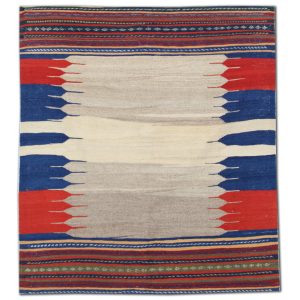
The nomenclature of Persian rugs derives from the cities, villages, and nomadic tribes from which they originate—each style imbued with unique motifs and symbolism. Examples include Isfahan, Tabriz, Kerman, Bakhtiari, Gabbeh, Bijar, Farahan, Senneh, Malayer, and the iconic Persian Kilim. Expert appraisers can often determine a rug’s origin through the subtle language of its design.
Whether placed in a modern townhouse or a classical interior, a Persian rug brings with it centuries of craftsmanship, regional pride, and woven storytelling.
In the world of Persian rugs, colour is far more than a visual flourish—it is an expression of symbolism, emotion, and heritage. Traditionally, these carpets were dyed using natural sources such as plants, insects, and minerals. The resulting hues, rich and enduring, reflect centuries of artistry and reverence for the natural world.

Plant-based dyes used in Persian rugs are more than just a nod to tradition—they actively promote health and harmony within your home. Unlike synthetic dyes, which often contain harmful chemicals and heavy metals, these natural pigments are non-toxic, hypoallergenic, and free from volatile organic compounds (VOCs). This makes them safe for children, pets, and anyone with sensitivities, while also contributing to better indoor air quality. Derived from sources like indigo, madder root, and walnut husk, these dyes often possess natural antibacterial, antifungal, and insect-repelling properties—helping preserve the rug while maintaining a cleaner living space.

Beyond their physical benefits, the earthy, muted tones of natural dyes foster emotional well-being, evoking a connection to nature that soothes the senses and reduces stress. The dyeing process itself is environmentally responsible, using sustainable methods that protect ecosystems and safeguard the artisans who carry these traditions forward. Choosing a naturally dyed Persian rug is not only an aesthetic decision—it’s a mindful one that nurtures your body, spirit, and the world around you.
A rare but sacred presence, green symbolises prosperity, rebirth, and eternal life. In Persian tradition, it is a colour of sanctity and balance. Its infrequent use makes its appearance all the more significant—often reserved for the most meaningful elements within a design.
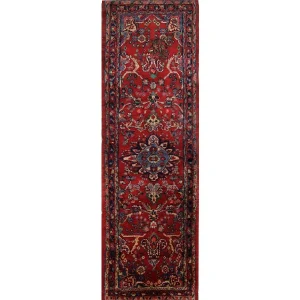
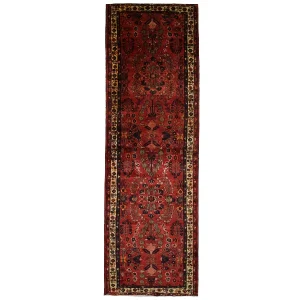
Among the most iconic and enduring colours in Persian rug artistry, red symbolizes vitality, courage, love, and spiritual passion. Traditionally believed to attract good fortune and ward off evil, it plays a powerful role in both aesthetic and symbolic dimensions. In Persian dyeing practices, red was historically extracted from two primary sources: the madder root (Ronas in Persian), a plant native to Iran with deep cultural significance, and a rare red insect known as Ghermez Daneh (Porphyrophora hamelii), which yielded a vivid crimson dye prized for its brilliance and durability. These natural dyes—carefully processed through time-honoured methods—produce rich shades of scarlet, rust brick, and wine red, each carrying subtle regional and tribal nuances. In home décor, red commands attention and warmth, creating a vibrant focal point that infuses spaces with energy, heritage, and a sense of timeless beauty.
In Persian tradition, yellow symbolizes wisdom, light, and nobility. Golden tones were historically rare and revered, often seen in rugs made for royalty or elite households. Creating these colours required extraordinary methods—such as using cow urine from herb-fed animals to produce a lustrous gold, or dyeing with the Sparak plant (Reseda luteola) for vivid, lasting yellow tones. These techniques reflect the artistry and symbolic depth behind every thread.
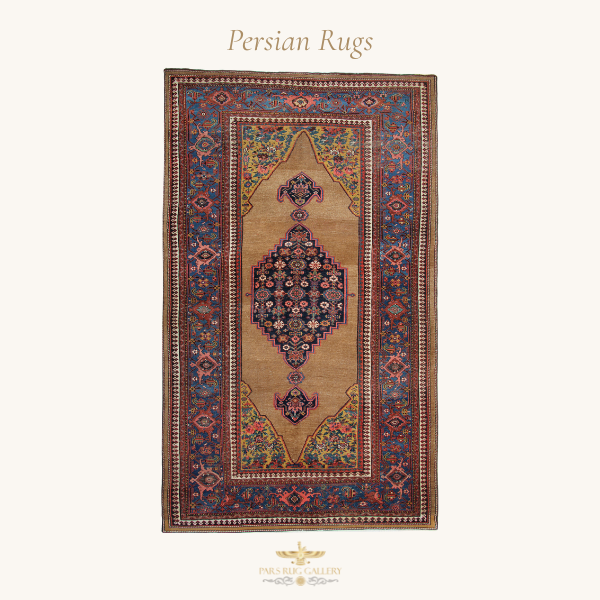

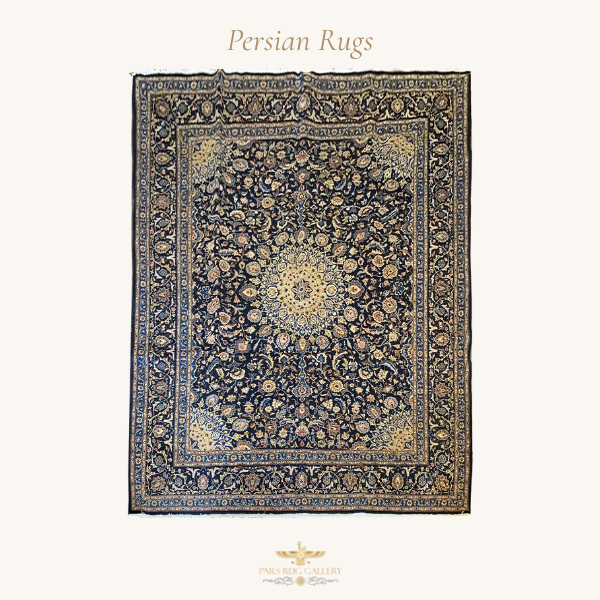
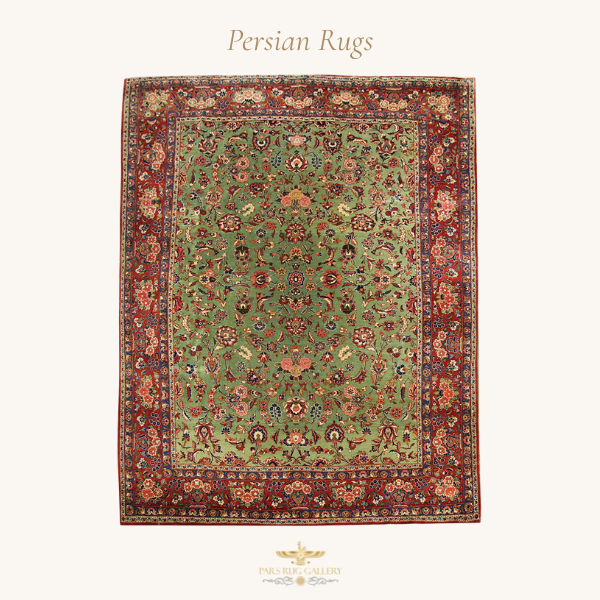
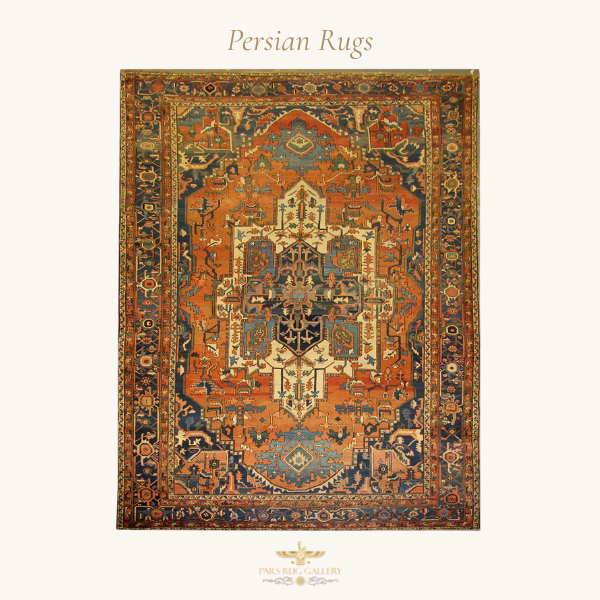

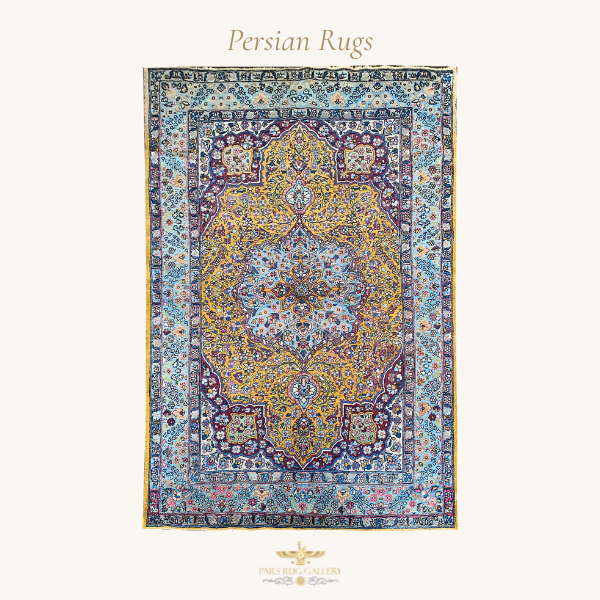
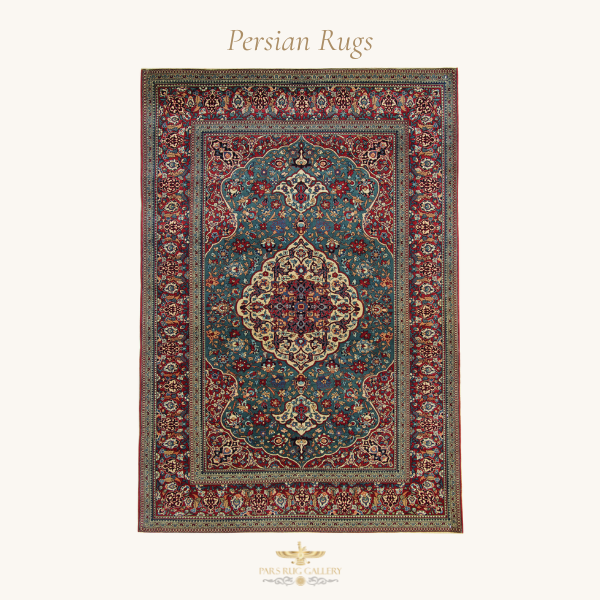

While black is traditionally associated with mourning or solemnity, it is rarely used in Persian rugs. The notable exception is in Karabagh rugs, where black appears more prominently. In these pieces, black serves both protective and aesthetic purposes—defining motifs, enhancing contrast, and lending visual depth to the design. Rather than dominating the palette, it is used strategically to elevate surrounding colours and bring clarity and drama to the overall composition.
Earthy and grounding, brown symbolizes fertility, stability, and a deep connection to the natural world. While traditionally derived from natural sources like walnut husks and tree bark, the most exclusive Persian rugs sometimes feature undyed brown wool from rare sheep breeds or camel hair, prized for their exceptional quality, softness, and authenticity. These naturally brown fibres not only enhance the rug’s richness and durability but also reflect a timeless connection to land, heritage, and the purity of traditional craftsmanship.
The orange colour in Persian rugs is associated with excitement and fire. This positive colour also adds a light-hearted note and fun touch to the patterns in the rug without overpowering other colours.
To own a Persian carpet is to possess more than a decorative item—it is to inherit a silent narrative, rich in Persian rug design and symbolism. These are not merely aesthetic compositions; they are eloquent expressions of spiritual and cultural heritage, often reflecting the weaver’s beliefs, environment, and aspirations.
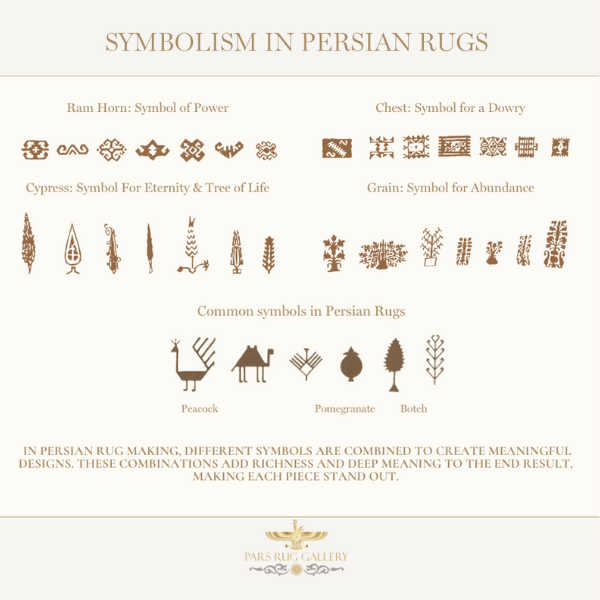
Understanding the meaning behind Persian rug patterns allows one to appreciate the profound storytelling imbued in every thread. Let us explore some of the most iconic Persian symbols and the significance they carry:

A recurring motif in Persian rug patterns, the boteh resembles a curved teardrop or flame. Often interpreted as a symbol of life and fertility, its dynamic shape conveys movement, growth, and eternal renewal. It is especially prominent in Persian carpets from Kerman and Qashqai.

Representing fertility due to its myriad seeds, the pomegranate is a revered symbol in Persian rug designs. It evokes abundance, prosperity, and familial continuity—ideal for those seeking meaningful luxury.

A motif of sublime elegance, the peacock—with its majestic, fanned-out plumage—stands for grace, immortality, and divine guardianship. Its inclusion elevates the Persian rug design, especially within Isfahan or Tabriz rugs.


Symbolising courage and honour, the lion is one of the most potent Persian symbols. Found in royal Persian carpets and tribal weavings alike, it denotes both literal protection and metaphorical guardianship.

Stars are a recurrent motif in traditional Persian carpet design, often representing guidance, celestial wisdom, and spiritual illumination. One especially captivating variant is the eight-pointed star, sometimes depicted with a central “eye”—referred to as the All-Seeing Star. This powerful symbol embodies intuition, divine protection, and cosmic awareness, reminding us of the higher order that governs earthly existence.

Water is universally regarded as the source of life and purity, and its depiction in Persian rug patterns—through waves, flowing lines, or stylised fish—serves as a symbol of renewal, abundance, and the soul’s journey. Such motifs introduce a sense of fluidity and calm to the overall composition.
Design Insight: In the tradition of Persian rug-making, multiple symbols are artfully combined to form composite narratives. A single rug may feature the Tree of Life alongside water elements, or a lion paired with a medallion and floral vines. These symbolic combinations enrich the storytelling, rendering each rug a unique expression of cultural identity and aesthetic philosophy. Goat Patten is another example

Persian rugs are not merely textiles—they are intricate narratives woven by master artisans, rich with history, symbolism, and cultural depth. Each pattern tells a story, often passed down through generations, reflecting the region, beliefs, and artistry of its weaver.
If you’re an interior designer, collector, or connoisseur of fine Oriental and Persian rugs, understanding these motifs will deepen your appreciation for these heirloom pieces. Below are some of the most iconic Persian rug patterns, crafted with intention and imbued with meaning.
The medallion is arguably the most recognisable of all Persian carpet designs. Typically featuring a bold, central motif—circular, oval, or diamond-shaped—it symbolises unity, balance, and harmony. These designs are particularly prominent in Isfahan rugs, renowned for their symmetrical layout and architectural influence.
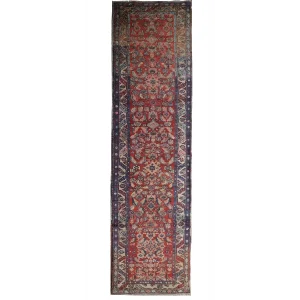
In contrast to the central medallion design, the all-over pattern blankets the rug with repeated motifs, absent of a singular focal point. This design often conveys a philosophical view of life’s endless journey, where every step and stage is interconnected. Tabriz rugs often showcase this sophisticated motif. In an all-over rug pattern, the entire rug’s surface is covered with repeated motifs without any central medallion or corner designs. This rug symbolises continuity, reflecting the idea that life is an endless journey.
The Tree of Life is a powerful emblem representing growth, abundance, and immortality. Typically featuring an upward-branching tree, it evokes a sense of spiritual ascension and fertility. Kerman and Qum rugs frequently incorporate this design, enhancing their spiritual and decorative significance.

Originating from the ancient city of Herat, this design features a diamond-shaped flower flanked by four acanthus leaves or fish-like forms. The Herati pattern is celebrated for its elegance and is a staple in many Persian rugs, especially those from the northwest regions.
For those designing elegant, meaningful spaces, Persian rug motifs serve as more than decorative elements—they are heritage statements. Whether incorporated into a minimalist London townhouse or a classically styled salon, these patterns bring both gravitas and grace.
If you’re considering a bespoke acquisition, exploring our curated selection of Persian rugs at Pars Rug Gallery will offer designs that transcend trends and preserve tradition.
Just as colour palettes differ across weaving traditions, so too do Persian rug patterns—each region bearing its distinct artistic legacy. The city of Isfahan, for instance, is celebrated for its symmetrical compositions and architectural precision, often presenting a majestic medallion design flanked by corner arabesques. These Isfahan rugs are highly prized for their refined silk-and-wool blends and exquisite craftsmanship.
In contrast, Kerman rugs, originating from the southeastern province of Iran, are known for their intricate and elaborate designs. These often feature the revered Tree of Life motif, floral cascades, and storytelling vignettes, offering a visual feast that mirrors the richness of Persian cultural heritage.
Understanding the regional distinctions not only enhances the appreciation of Persian and Oriental rugs, but also aids collectors and designers in sourcing pieces that align with their aesthetic and cultural preferences.
The artistry behind the creation of a Persian rug is nothing short of extraordinary. Every piece is meticulously handwoven, often requiring months—or even years—of dedicated craftsmanship to complete. These are not merely decorative pieces, but profound expressions of cultural heritage, patience, and precision.
Revered both within Iran and across the globe, Persian carpets are universally recognised as emblems of timeless luxury, refined taste, and historical richness. They transcend fashion trends, holding their place as enduring heirlooms and statement pieces in the world’s most discerning interiors.
By delving into the symbolism of colours, patterns, and motifs, one gains a deeper appreciation for the masterful storytelling embedded within each design. From the bold elegance of a red Persian rug to the serene sophistication of a blue Persian rug, every hue and weave reflects a legacy of meaning.
At Pars Rug Gallery, we are proud to curate an exquisite selection of authentic Persian rugs, showcasing not only artistry but authenticity, rarity, and cultural legacy. Whether for a stately salon or a contemporary drawing room, our collection invites you to invest in a piece of history—woven by hand, and made to last for generations.
At Pars Rug Gallery, we believe a cushion is never just a cushion — it’s a work of art, a conversation starter, and the finishing

In the world of rug restoration, there are moments that feel like pure privilege—moments when a piece arrives not just as a textile, but as

At Pars Rug Gallery, we regularly receive rugs that have journeyed through generations—each one carrying not just fibers and knots, but history, memory, and value.

Rugs possess not only aesthetic beauty but also historical and artistic significance. Whether a timeless Persian heirloom, a finely woven modern piece, or a striking

In the refined setting of a well-appointed home, a rug does far more than simply cover the floor—it becomes a canvas of comfort, character, and